


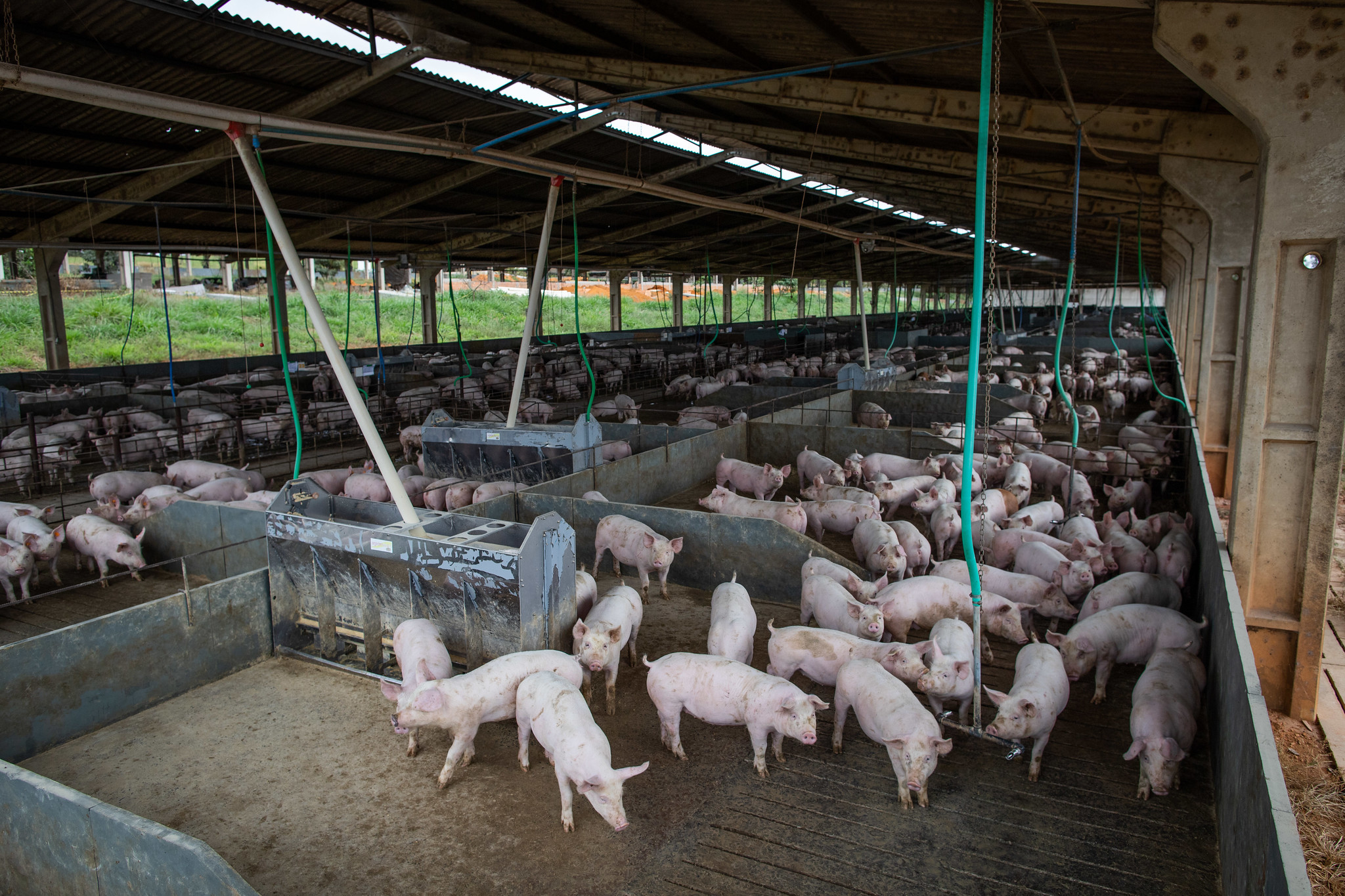
According to ABPA, between January and October 2025 Brazilian pork exports increased by 12.9% in volume and by 22% in value terms. ABPA President Ricardo Santin noted that even against the backdrop of a second consecutive year of around a 30% decline in Chinese pork imports, Brazil has managed to significantly expand its presence in other fast-growing markets.
Among the key export destinations, Santin highlighted Japan, where shipments rose by 25%, Vietnam (+24%), Mexico, and especially the Philippines, which has now become the leading destination for Brazilian pork. Diversification of export markets has been a decisive factor in offsetting weaker demand from China.
Based on preliminary data from Brazil’s foreign trade system Siscomex, pork exports in November are expected to reach around 120,000 tonnes, generating approximately US$300 million in revenue. As a result, total exports for January–November are projected at 1.37–1.38 million tonnes, nearly 11% higher than in the same period of 2024.
ABPA also forecasts that Brazil’s total pork production could reach 5.55 million tonnes in 2025, rising to 5.7 million tonnes in 2026, which would represent growth of about 2.7%. This indicates that the country is not only expanding exports but also steadily strengthening its production base.
Analysts attribute Brazil’s rapid rise in the global export ranking to a combination of domestic and external factors. Key drivers include competitive production conditions, a stable exchange rate, and relatively low feed costs. Strong grain harvests ensure ample supplies of maize and soybeans, helping to keep production costs predictable and allowing producers to operate with comfortable margins.
External market conditions have also been favorable. The United States has been redirecting a larger share of pork production to domestic consumption, resulting in a roughly 3.5% decline in U.S. exports. At the same time, Brazil is counting on the possibility of new sanitary approvals from China, particularly for pork offal, which could open additional opportunities in one of the world’s largest markets.
Against this backdrop, Canada’s position appears to be weakening. While the country initially forecast pork exports of 1.45 million tonnes in 2025, expectations have since been revised downward to 1.3–1.35 million tonnes. Brazil, by contrast, is expected to reach 1.49 million tonnes of exports this year, according to ABPA. If these figures are confirmed, Brazil would officially take third place among the world’s largest pork exporters.
Despite strong export growth, Brazil’s domestic market is also showing positive dynamics. Domestic pork supply is expected to rise to 4.06 million tonnes in 2025 (+2.7%), while per capita consumption could increase to 19 kg per year. ABPA emphasizes that stable maize and soybean prices are making production costs more predictable, continuing to support the competitiveness of Brazilian pork both domestically and on international markets.
PigUA.info, based on materials from pigprogress.net