


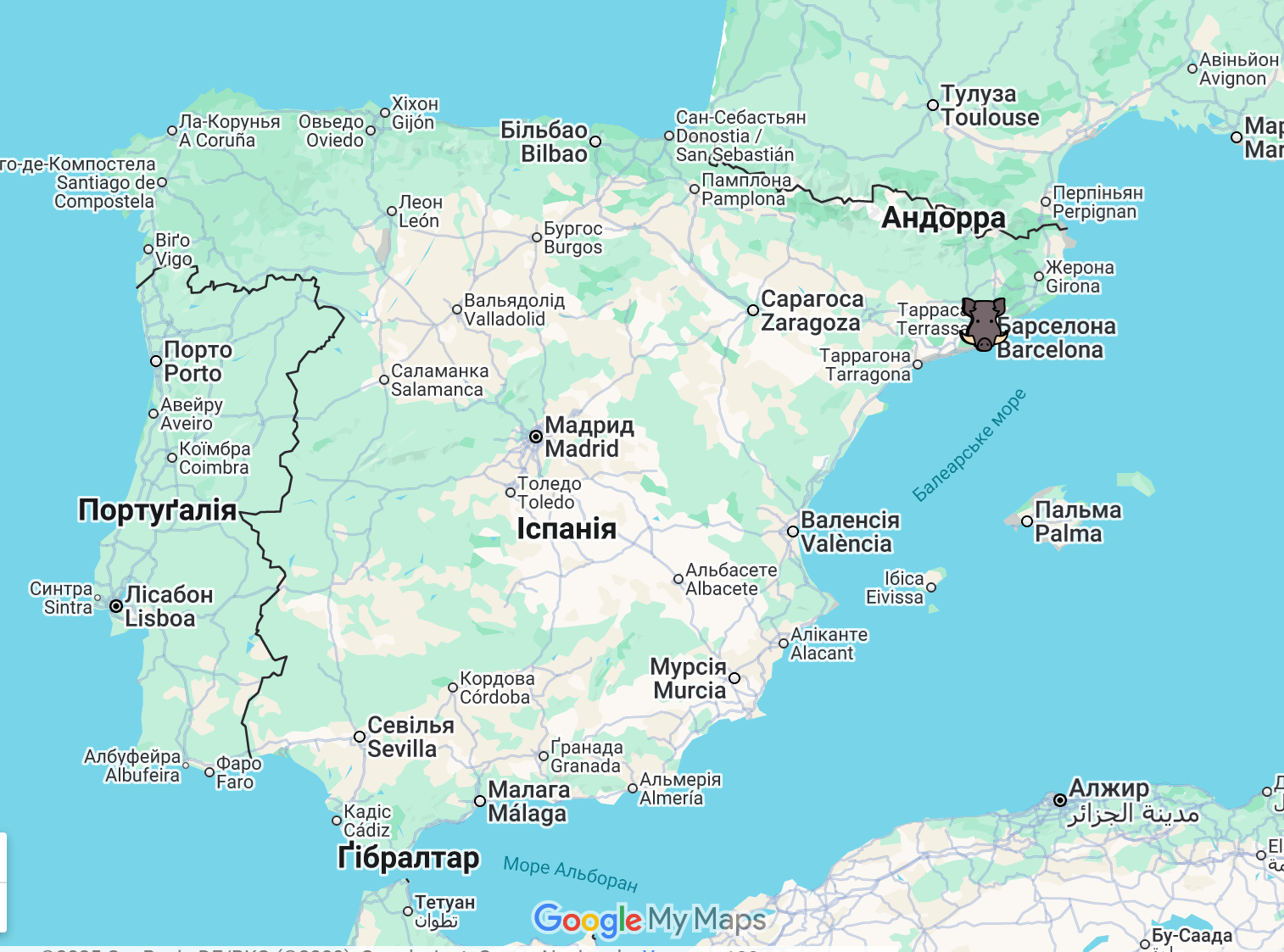
According to La Vanguardia, a total of 14 wild boar carcasses have been found: 2 on Friday, 4 on Saturday, and 8 on Sunday. Samples from the newly discovered animals have been submitted for analysis to confirm or rule out the presence of the virus.
Major trade restrictions: nearly 40 countries halt imports of Spanish pork
The ASF outbreak in Catalonia triggered an immediate response from Spain’s trading partners. According to Spain’s Minister of Agriculture Luis Planas, around one-third of 400 export certificates are currently blocked.
“We are working to restore export opportunities as quickly as possible,” the minister said, noting that Spain’s total pork export value amounts to €8.8 billion per year.
Countries that have already closed their borders to Spanish pork and pork products include the United States, Canada, Brazil, Japan, Mexico, the Philippines, South Africa, Thailand, Chile, Colombia, Peru, Uruguay, Ecuador, Venezuela, and others — nearly 40 nations in total.
EU, China, and South Korea apply regionalisation
Unlike non-EU countries, European markets remain open to Spanish pork under regionalisation rules. Restrictions apply only to farms within a 20 km radius of the outbreak site.
China and South Korea have also agreed to follow the principle of regionalisation, partially softening the economic blow. However, the situation remains difficult as the outbreak occurred in Catalonia — Spain’s largest pork-producing region, home to approximately 5,000 farms.
The Chinese market is particularly important. According to La Vanguardia, Spain exported 540,000 tonnes of pork to China in 2024, valued at €1.1 billion — mainly offal and bones, products with limited demand in the EU.
“A very serious problem”: 300,000 jobs at risk
Professor Christian Gortázar of the University of Castilla–La Mancha stressed the scale of the threat:
“Spain is the world’s third-largest pork exporter. Losing ASF-free status is a very serious issue. The industry provides around 300,000 direct and indirect jobs, many of them in rural areas.”
He emphasized the need for immediate measures to minimise social, economic, ecological, and other impacts.
Catalonia introduces emergency measures: traps, fences, and possibly military support
Catalonia’s Minister of Agriculture Òscar Ordeig announced a series of urgent steps to stop further spread of the virus:
- installation of traps to capture wild boar;
- use of repellents;
- construction of fences to limit animal movement;
- closure of the natural area to the public starting November 30;
- potential deployment of the army to enforce access restrictions.
The outbreaks were detected near the Bellaterra Campus of the Autonomous University of Barcelona (UAB), a major research hub for the swine industry. So far, the university’s operations remain unaffected.
Origin of the virus remains unknown
Authorities have not yet determined how the virus entered the region. The investigation is ongoing, and officials urge farmers and hunters to maintain the highest level of biosecurity.
Spain now faces one of the most significant crises in its swine sector in decades. Whether the country can contain the virus and mitigate economic losses will become clear in the coming weeks.
PigUA.info based on materials from pigprogress.net