


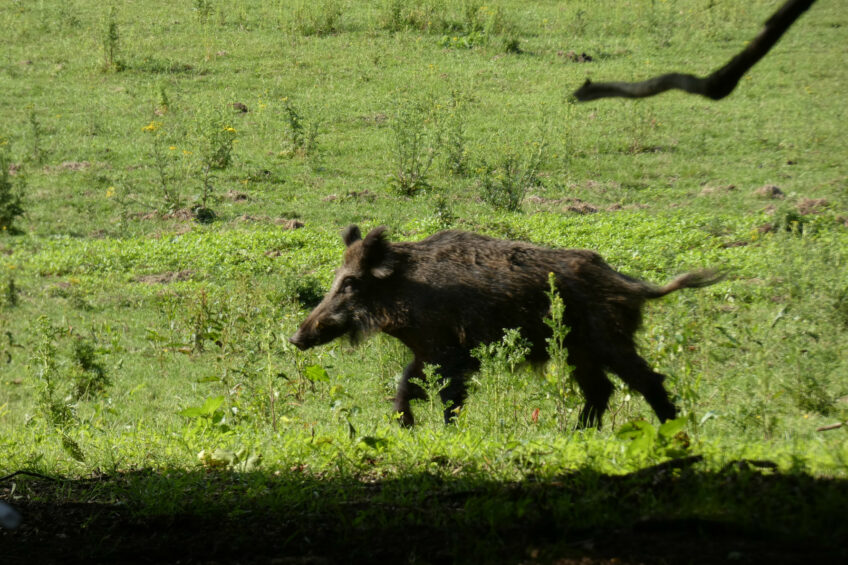
The search for the source of the current ASF outbreak in Catalonia, first recorded in late November 2025, is continuing along several scientific and law-enforcement tracks simultaneously. According to El Periódico, at least four separate investigations are currently underway. One of them was initiated by the Catalan government — the Generalitat de Catalunya — and carried out by the Institute for Research in Biomedicine in Barcelona.
The research was led by Professor Toni Gabaldón, whom the Catalan authorities describe as a recognised expert in phylogeny and comparative genomics. Scientists analysed 17 ASF virus strains that had previously been handled by the IRTA-CReSA laboratory, which is located within the outbreak area.
The results published by the Catalan government were conclusive: none of the laboratory strains genetically match the virus responsible for the current outbreak. Samples taken in the Cerdanyola del Vallès area showed dozens of specific mutations, as well as a significant deletion of a genomic fragment, which were absent from all laboratory isolates. According to the researchers, this makes it impossible to link the outbreak to laboratory activity.
Complete genome sequencing showed that the virus belongs to ASF genotype II, broadly similar to known European variants, but with substantial genetic changes that have not been previously described. The Catalan authorities characterised this variant as having a unique “genetic fingerprint” — a combination of a large genomic deletion and a set of mutations atypical for strains currently circulating in Western Europe.
According to El Periódico, the new variant contains up to 27 mutations and a deletion of around 10,000 “letters” in its genetic code, distinguishing it from the roughly 800 ASF strains described to date in international scientific literature. Professor Gabaldón does not rule out that these features could explain the different behaviour and virulence of the virus in Catalonia compared with other European outbreaks.
At the same time, the Catalan Ministry of Agriculture has clarified that the analysis is not yet fully complete. According to the ministry’s secretary general, Cristina Massot, two additional samples from IRTA-CReSA are still awaiting sequencing. These are frozen materials from studies conducted more than five years ago.
The final word on the possible laboratory origin of the virus is expected from Spain’s reference institution, the Central Veterinary Laboratory in Algete near Madrid. Its conclusions are being eagerly awaited by both scientists and authorities. In parallel, separate investigations are being conducted by the Catalan police and the civil guard.
Meanwhile, the epizootic situation in the region remains tense. The number of confirmed ASF cases among wild boar has risen to 29. All infected animals have been found within a 6-kilometre radius of the initial detection site. The two most recent cases were recorded south of the town of Cerdanyola del Vallès, near the AP-7 motorway. These cases were reported to the World Organisation for Animal Health with a delay that, according to preliminary assessments, was likely due to the Christmas holidays.
Overall, the new scientific evidence increasingly points toward the introduction of a new or previously unidentified ASF virus variant into Catalonia, while definitive conclusions on its origin are still pending.
PigUA.info, based on materials from pigprogress.net