
Denmark remains the largest foreign supplier of pork and pork products to the United Kingdom, accounting for around 21% of British imports.
For this reason, the UK pork sector is closely monitoring the plans of Denmark’s new government, which has stated its ambition to become the “greenest government” in the country’s history.
Among Copenhagen’s plans are stricter pig welfare requirements, tighter environmental and production planning standards, and a significant reduction in piglet exports.
Less Danish Pork Could Increase Market Pressure
According to the UK agricultural levy board AHDB, any reduction in Danish production could tighten pork supplies across the European market and disrupt established trade flows.
For the United Kingdom, the risks are particularly significant because of its high dependence on imports.
At the same time, the situation could also create new opportunities for British producers. If processors and retailers begin looking for alternatives to Danish supplies, domestic farmers could potentially meet part of that demand.
Denmark Wants to Process More Pork Domestically
Denmark’s new government also plans to restructure the pig sector so that more animals remain in the country for food production and processing rather than being exported as live piglets.
The goal is to increase domestic added value and support employment in the meat processing industry.
This approach could gradually change Denmark’s role in the European market — from a major supplier of live animals towards a greater focus on exports of finished, higher-value products.
New Requirements Could Raise Production Costs
AHDB notes that stricter welfare standards and environmental requirements are almost certain to increase costs for producers.
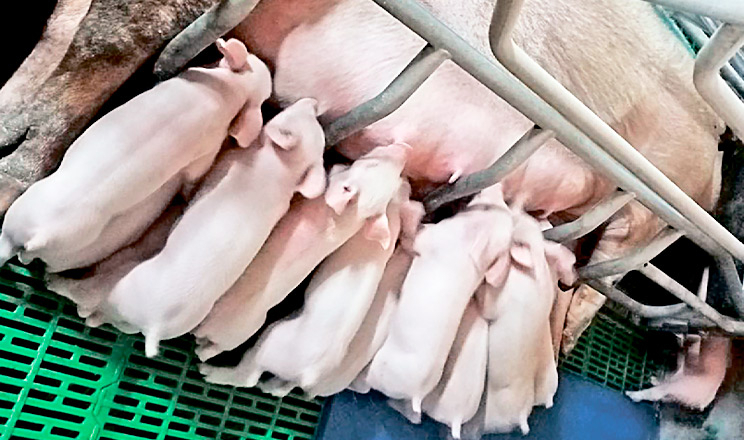
Longer lactation periods, for example, could reduce the number of litters produced per sow each year, while adapting housing systems would require investment in buildings, equipment and management.
For a sector that depends heavily on exports, this creates a new challenge: maintaining competitiveness while production costs are rising.
The UK Remains Dependent on Imports
The UK market is particularly vulnerable to changes in Danish production because the country is only around 69% self-sufficient in pork.
Besides Denmark, the main suppliers of pork to the United Kingdom include the Netherlands, Germany and Poland.
Denmark also supplies substantial volumes not only of fresh pork, but also bacon, ham and sausage products.
However, the Danish government has already indicated that the country will continue to focus on exports of higher-value products. As a result, future changes may be uneven: shipments could fall more sharply in some product categories while remaining relatively stable in others.
UK Pork Imports Are Already Declining
At the same time, the United Kingdom is already importing less pork in 2026 than it did a year earlier.
In the first half of the year, imports of fresh pork totalled nearly 120,000 tonnes, compared with around 126,000 tonnes in the same period of 2025.
Frozen pork imports exceeded 28,000 tonnes, around 3,500 tonnes lower year on year.
Bacon imports declined particularly noticeably, from 84,000 tonnes to 76,000 tonnes.
Offal imports also fell, from 8,700 tonnes in the first half of 2025 to 7,500 tonnes this year.
A potential decline in Danish production would therefore come on top of an existing downward trend in UK pork imports. If the Danish reforms do lead to lower production and export volumes, the British market may have to find alternative suppliers more quickly or rely more heavily on domestic production.
PigUA.info, based on materials from foodagribusiness.world