

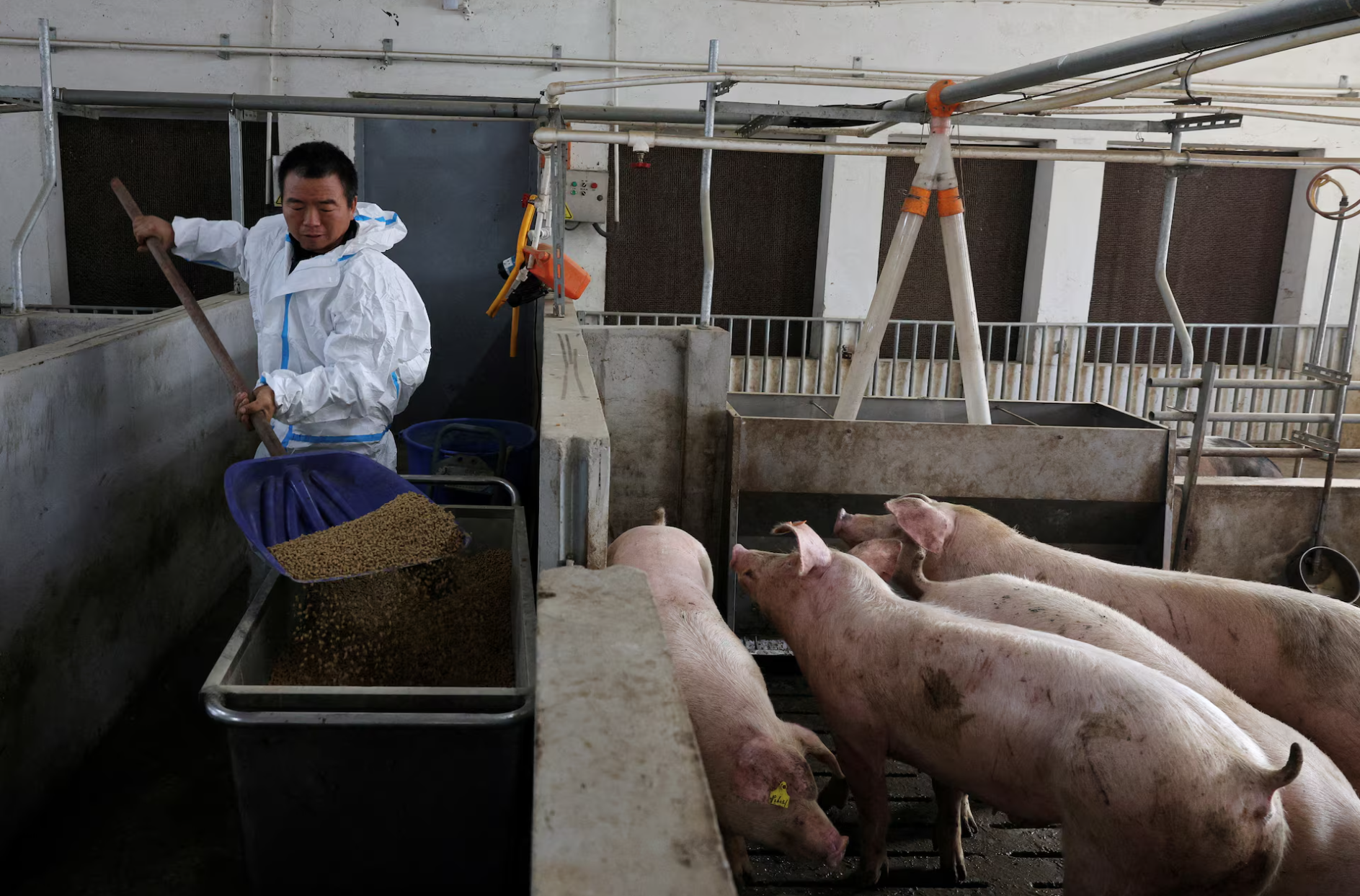
According to Reuters, feed accounts for up to 70% of pork production costs, making soybean price increases—driven in part by U.S.-China trade tensions and developments in the Middle East—a key factor pushing producers to seek cheaper alternatives. One solution has been the use of fermented mixtures made from locally sourced ingredients (such as bran, plant residues, and by-products), in which proteins are partially broken down and easier for animals to digest.
At the same time, this shift has a strategic dimension at the state level. China imports around 80% of its soybean needs, and reducing its use is seen as an important step toward greater food self-sufficiency. The share of fermented feed in industrial production is expected to grow from 8% currently to 15% by 2030, which could reduce soybean imports by more than 6%.
The transformation involves all parts of the value chain—from farmers to large agribusiness companies. For example, one of the world’s largest pork producers, Muyuan Foods, has already reduced the share of soybean meal in feed from 10% to 7.3% by using synthetic amino acids. At the same time, alternative feed formulations are being developed for other livestock sectors as well.
Despite the rapid adoption of new technologies, experts point to several challenges. Transitioning to fermented feed requires investment and upgrades to feeding systems, while the lack of standardized approaches may affect animal performance and health. Questions also remain regarding meat quality and flavor characteristics.
Overall, China is demonstrating a systemic approach to transforming its livestock sector, combining economic incentives for producers with long-term goals of reducing import dependence and strengthening food security.