


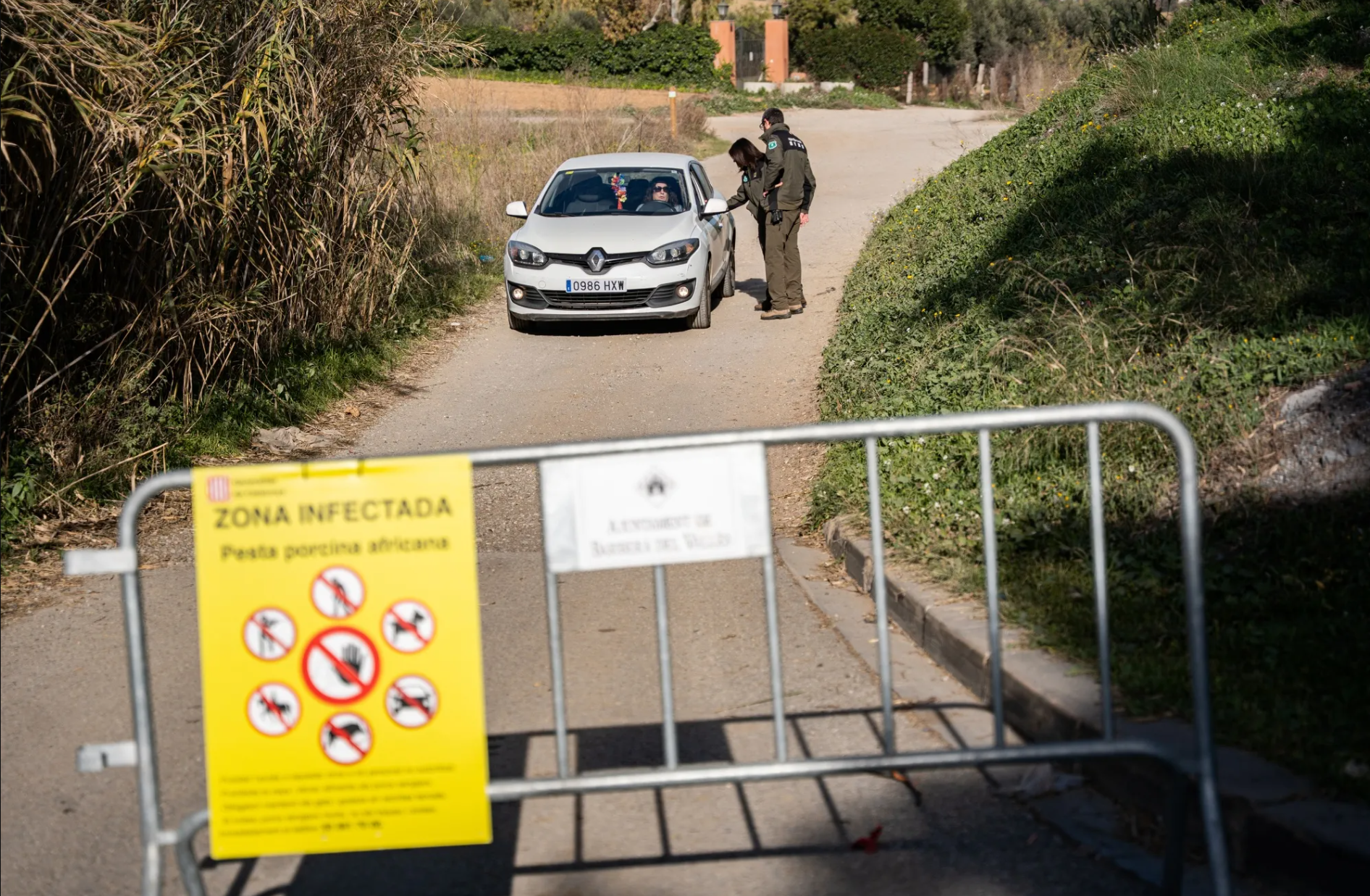
According to official information from the Spanish government, a total of 26 wild boar deaths from ASF have now been confirmed since the outbreak began. All newly discovered carcasses were found close to the original outbreak site in the municipality of Cerdanyola del Vallès, approximately 10 kilometers north of central Barcelona. At the same time, authorities report that an additional 208 wild boar carcasses collected in the area were tested and returned negative results for ASF.
To prevent the virus from spreading to commercial pig farms, Spain has significantly intensified disease control measures. Soldiers, police units, canine teams and drones have been deployed on the outskirts of Barcelona to support search and surveillance operations. The primary objective is the rapid detection of infected or dead wild boar and the prevention of contact between wildlife and commercial pig holdings.
African swine fever poses no risk to humans, but it represents a serious threat to pig production. Spain is the largest exporter of pork within the European Union and the second-largest globally, meaning that even a localized outbreak carries substantial economic consequences. Following the detection of ASF, several countries, including Mexico and Japan, have already suspended imports of Spanish pork.
Concerns about further spread remain in neighboring regions as well. In the autonomous community of Aragón, authorities have introduced financial incentives to reduce the wild boar population, offering hunters up to €30 per animal. Wild boar are considered the main reservoir and vector of the virus.
The discovery of dead animals is the result of joint field operations involving rural agents, Spain’s Military Emergency Unit, the Civil Guard and Catalonia’s regional police force, the Mossos d’Esquadra.
Spain eradicated ASF from its commercial pig sector in the 1960s. Since then, the industry has focused heavily on high biosecurity standards, while small-scale artisanal pork production has largely disappeared. However, wild boar populations in Spain’s forests have expanded rapidly in recent years. Key drivers include milder winters linked to climate change, a lack of natural predators and rural depopulation. As a result, wild boar increasingly venture into residential areas, forage in waste containers and, in some cases, enter urban environments.
Authorities stress that the coming weeks will be critical for containing the outbreak. Successful localization of ASF within the wild boar population is seen as a key condition for protecting commercial pig farming and restoring access for Spanish pork to international markets.
PigUA.info, based on materials from Bloomberg.com