

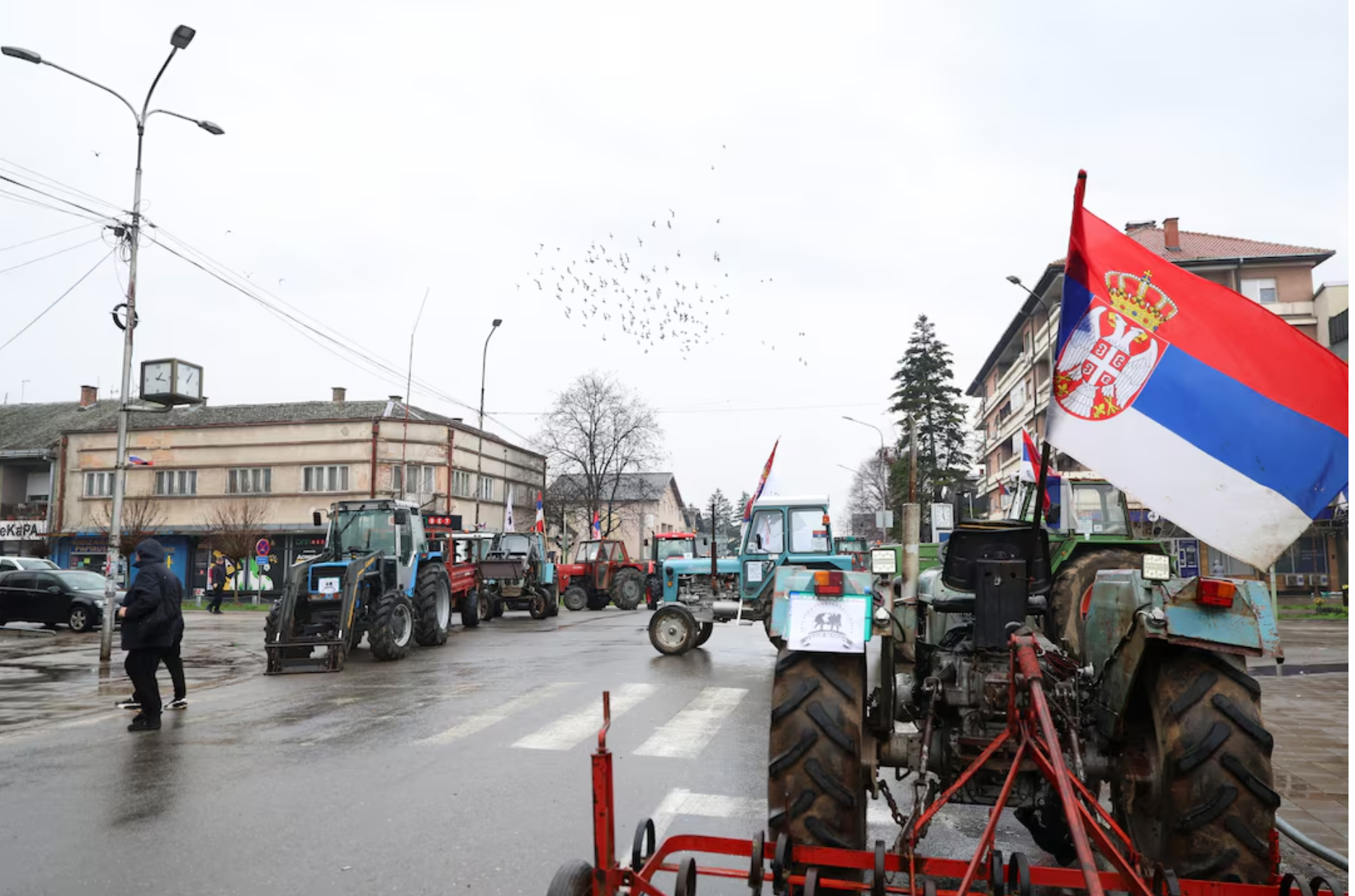
According to Reuters, the protests began nearly two weeks ago in southwestern Serbia and have gradually spread to other regions. On Tuesday alone, demonstrators blocked roads at 42 locations. In the town of Bogatić in western Serbia, farmers gathered at a major intersection where tractors decorated with national flags effectively brought traffic to a standstill. Protesters say they will continue the blockades until their demands are met.
Representatives of farmers’ associations stress that the situation in the sector has become critical. According to them, large volumes of imported milk and dairy products — mainly from the EU and other Western Balkan countries — are being sold at prices far below the sustainable production costs for local farmers. Protesters argue that this is pushing Serbian producers toward collapse.
A similar situation is observed in the pork sector, where farmers say live pig prices have remained below economically viable levels for an extended period and do not cover production costs.
Among the key demands are increased government support and the introduction of temporary restrictions or tariffs on certain agricultural imports to create fairer market conditions.
Serbia’s Agriculture Minister Dragan Glamočić said that farmers failed to attend talks aimed at discussing measures to stabilize the milk market. According to him, some retailers have already agreed to increase purchases of locally produced dairy products.
The farmers’ demonstrations coincide with ongoing nationwide anti-government protests that have continued since 2024. Some participants in the agricultural protests have also voiced political demands, including calls for the resignation of the country’s president.
Agriculture plays a significant role in Serbia’s economy: in 2024, the sector accounted for 6.1% of GDP and employed about 20% of the workforce. At the same time, Serbia is a candidate for European Union membership and is gradually aligning its agricultural policies with EU rules, including opening its market to products from member states.
PigUA.info, based on materials from thepigsite.com