

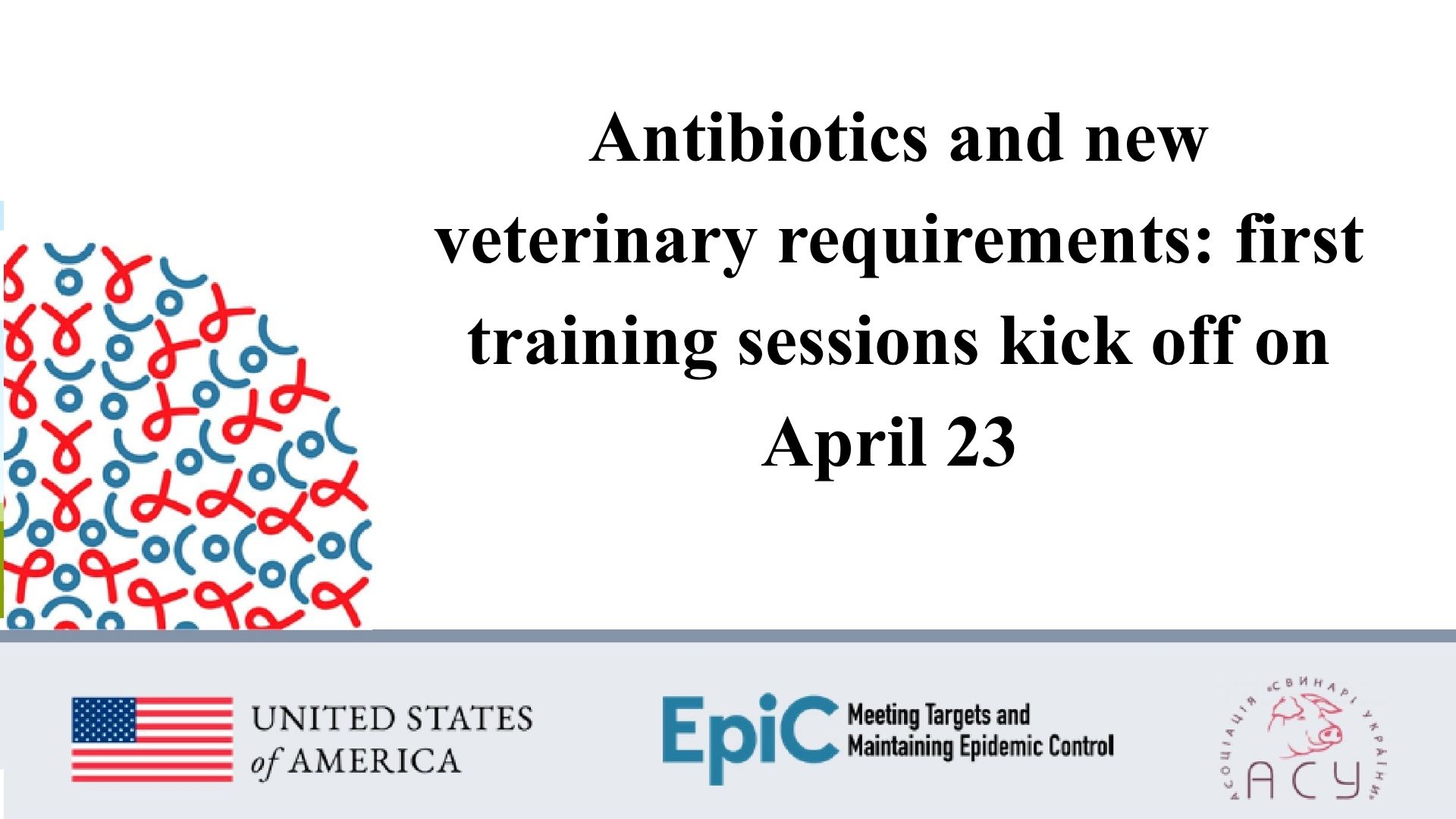
The initiative responds to growing demand from producers facing new rules, including prescription-only use of antibiotics, the strengthened role of licensed veterinarians, and stricter requirements for treatment traceability, record-keeping, and control of antimicrobial use.
The training program is designed with a strong practical focus and includes analysis of real production scenarios—from diagnosis to treatment decision-making—as well as approaches to systematic antibiotic use management on farms.
Upcoming training dates:
- May 6 — Poltava
- May 19 — Kyiv
Farm managers, veterinarians, and specialists responsible for animal health management are invited to participate.
Participation is free of charge, but the number of places is limited. Registration by phone: +380688629496
The initiative is implemented with the support of the Association of Pig Farmers of Ukraine within the framework of the international EpiC project and aims to develop practical skills for operating under the new veterinary requirements.
The Association of Ukrainian Pig Breeders is a non-profit, voluntary organization founded by domestic pork producers. Its main objectives are to represent and protect the rights and interests of member farms, promote the development and implementation of efficient pork production technologies, expand market access, and protect the domestic market.
The EpiC project in Ukraine aims to strengthen public health, animal health, and laboratory capacity through targeted technical assistance, institutional capacity building, and improved coordination between national and regional authorities in line with international standards and a One Health approach.