
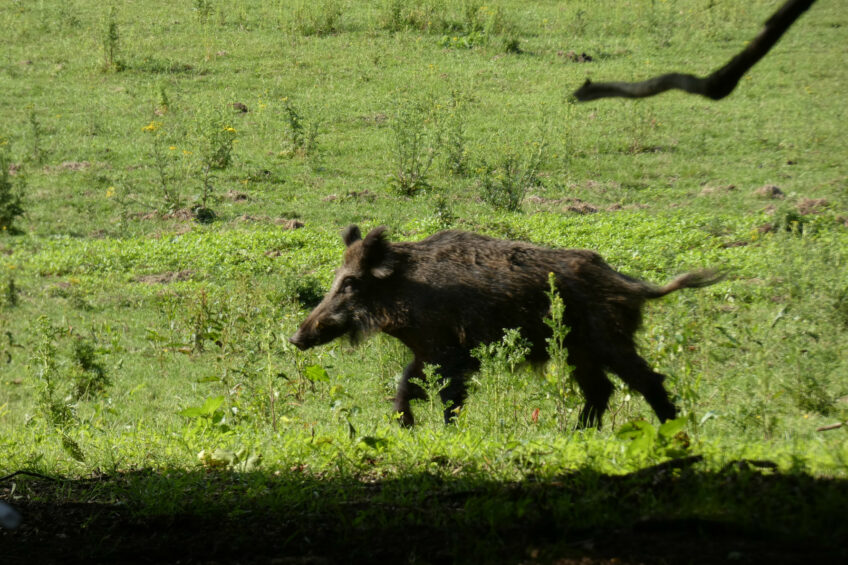
Germany is expanding African swine fever (ASF) restricted zones in the federal states of Hesse and Rhineland-Palatinate due to the further spread of the virus among wild boar populations. The measures follow newly confirmed ASF cases in the Siegen-Wittgenstein district of North Rhine-Westphalia.
At the beginning of May, positive ASF cases were detected in the Kreuztal and Netphen areas. Following this, the Ministry of Agriculture and Consumer Protection of North Rhine-Westphalia announced an expansion of the existing restricted zones.
In response, the neighbouring districts of Lahn-Dill in Hesse and Altenkirchen in Rhineland-Palatinate applied to the European Union for the establishment of new ASF restricted zones.
In the Lahn-Dill district, following coordination with the Hessian ministries and confirmation by the EU, parts of the northern district were officially classified as restricted zones I and II starting from May 22. Restricted zone II covers the areas directly adjacent to the location where the virus was detected in North Rhine-Westphalia, while restricted zone I serves as a buffer zone.
At the same time, the situation in the Altenkirchen district is also raising concern, as ASF cases have now approached within approximately 12 kilometres of the district border. Following approval by the European Commission, local authorities introduced a new restricted zone I along the border with North Rhine-Westphalia. According to District Administrator Dr. Peter Enders, the measure is purely preventive and aimed at stopping further spread of the disease.
In addition, construction has begun on a new protective fence against ASF spread in the region, stretching from Wildenburger Land to Stegskopf.
Thus, Germany continues to strengthen its biosecurity system and wild boar population control measures amid the ongoing high epizootic risk in the western regions of the country.
PigUA.info based on materials from euromeatnews.com