
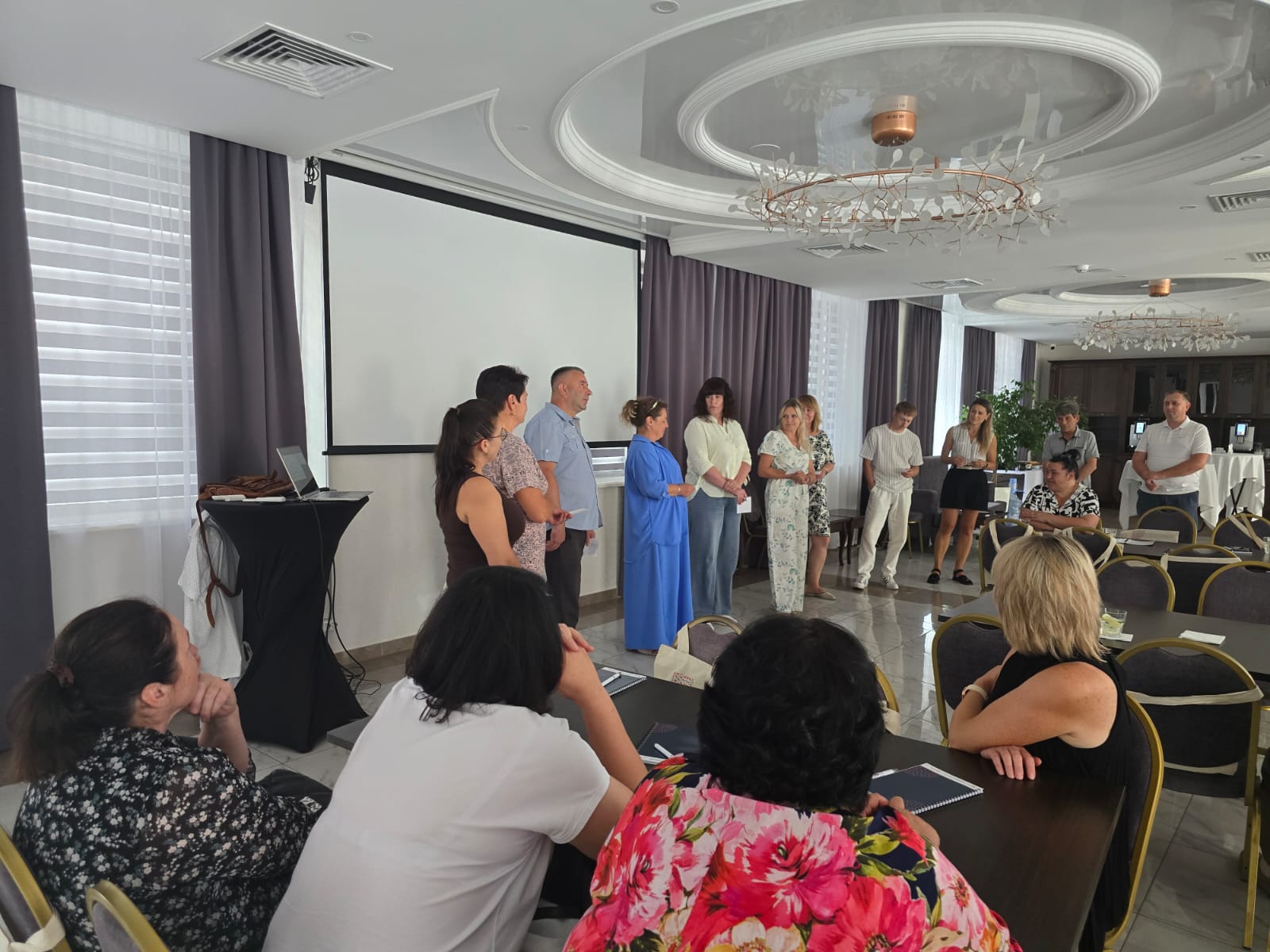
The events brought together representatives of local self-government authorities, village and settlement heads, professionals from the social and education sectors, as well as representatives of civil society organizations working with local communities.
During the training, participants discussed the role of territorial communities in promoting responsible antibiotic use and raising awareness about antimicrobial resistance prevention. Particular attention was paid to common mistakes made by animal owners during treatment and to effective ways of communicating practical information to community members.
A separate session focused on risk communication. Participants examined real-life situations faced by livestock owners, learned how to adapt complex information for different target audiences, and practiced effective approaches to engaging with local communities.
The Rivne training sessions marked another stage of the nationwide Enhancing Capacity for Epidemic Control (EpiC) project, funded by the U.S. Department of State. The project aims to strengthen public health, animal health, and the implementation of the One Health approach in Ukraine.
The next training sessions for representatives of territorial communities will take place in Cherkasy, where participants will continue developing practical skills in risk communication and community outreach on antimicrobial resistance.
The EpiC project in Ukraine aims to strengthen public health, animal health, and laboratory capacity by providing targeted technical assistance, building institutional capacity, and improving coordination between national and regional public health and animal health authorities in line with international standards and cross-sectoral principles.
The Association of Ukrainian Pig Breeders (AUPB) is a non-profit voluntary organization founded by Ukrainian pork producers. Its primary objectives are to represent and protect the interests of member farms, promote the development and implementation of modern pork production technologies, expand market opportunities, and protect the domestic pork market.