
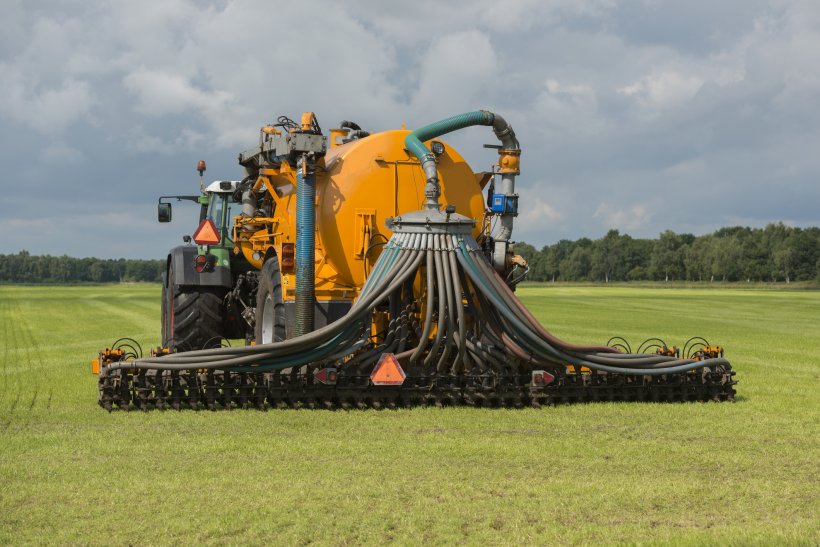
According to the latest SEI data, manure management made the largest contribution to reducing emissions from the livestock sector, with associated ammonia emissions falling by 14.9%.
Emissions related to the application of organic fertilisers, including those generated during livestock grazing, declined by a further 2.1%.
Overall, taking into account not only livestock farming but also other sources, ammonia emissions in Spain fell by 13% between 2005 and 2024.
According to Spain’s Ministry of Agriculture, Fisheries and Food, the country has now met its emission reduction commitments under European legislation for the fourth consecutive year. The reduction achieved is around four times greater than the minimum required for any year during the 2020–2030 period.
Intensive Pig and Poultry Farms Monitored Through Ecogan
The National Air Pollutant Inventory includes data on nitrogen balance and the implementation of Best Available Techniques (BAT) in intensive pig and poultry farming.
Information is collected individually for each farm through the Ecogan digital system, based on data provided by producers and subsequently submitted by regional authorities.
The ministry notes that improvements to Ecogan make it possible to assess more accurately which emission-reduction technologies are being used on farms and how they affect the overall environmental performance of the livestock sector.
Emissions from Mineral Fertilisers Increased
Unlike the livestock sector, ammonia emissions associated with the use of nitrogen fertilisers increased in 2024.
The main reason was higher fertiliser consumption, particularly urea. This followed two years of lower fertiliser use due to higher prices after the start of the war in Ukraine and the severe drought of 2023.
Despite this increase, the ministry believes Spain remains on track to meet its target of reducing total ammonia emissions by 16% by 2030 compared with 2005.
PigUA.info, based on materials from 3tres3.com