


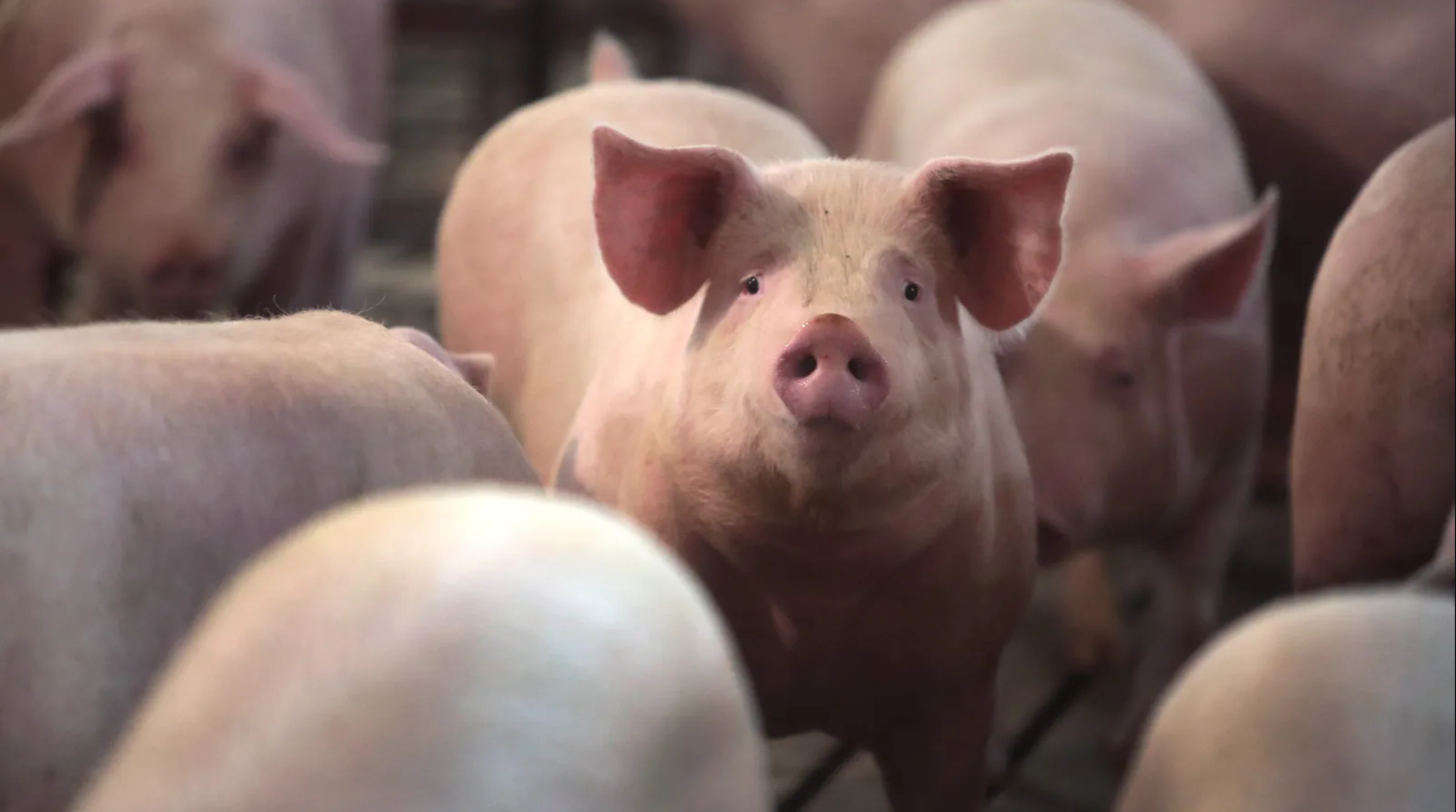
One of the key factors affecting the pork market remains African swine fever, which was detected in wild animals in Spain in November 2025. Japan, Malaysia and Taiwan continue to apply restrictions on Spanish products, while China, South Korea and the Philippines have adopted the regionalisation principle.
Following the loss of access to some traditional markets, Spanish exporters redirected more product to other EU countries, as well as to the United States, Vietnam and South Korea. This increased supply in certain markets and intensified price pressure and competition among suppliers.
China Reduces Pork Purchases
Weaker import demand from China remains an additional challenge for the global market. A reduction in the sow herd and higher slaughter volumes in the first months of 2026 supported domestic pork supply, reducing the need for imports.
Available data indicate that China’s pork purchases had fallen by around 30% by August.
USDA expects Chinese imports to decline by a further 2% in 2027 to 820,000 tonnes. Global pork exports, meanwhile, are forecast to remain broadly stable at around 10.6 million tonnes.
EU shipments are projected to fall by 3% to 2.95 million tonnes, while Brazil could increase exports by around 2% to 1.85 million tonnes.
Under these conditions, finding alternative markets and the ability to meet the sanitary requirements of importing countries will become increasingly important for exporters.
Poultry Meat Market to Continue Growing
Unlike pork, the poultry meat sector has a more favourable outlook. USDA forecasts global chicken production to increase by 2%.
In China, production could rise by 6%, supported by stable feed prices and investment in vertical integration.
Global chicken exports are forecast to increase by 3% in 2027 to around 15.6 million tonnes. China could expand shipments by 25% to 1.9 million tonnes, while Brazil’s exports are projected to rise by 1% to around 5.5 million tonnes.
EU chicken production is expected to reach 13 million tonnes, 2% more than a year earlier.
Brazilian Beef Faces New Trade Barriers
For the beef market, one of the main challenges is tighter access for Brazilian product to key markets.
China has introduced tariff-rate quotas for imports of fresh and frozen beef for 2026–2028. Shipments above the established quota will be subject to a 55% tariff.
In addition, Brazil lost access to the EU market in September 2026 due to non-compliance with requirements concerning antimicrobial substances.
USDA forecasts Brazilian beef exports to decline to 4.1 million tonnes in 2027. Southeast Asia, the Middle East and South American countries could become alternative destinations for some of this product.
As a result, global meat trade will increasingly depend not only on the production capacity of exporting countries, but also on sanitary status, trade rules and the ability to redirect shipments quickly to new markets.
PigUA.info, based on materials from euromeatnews.com