

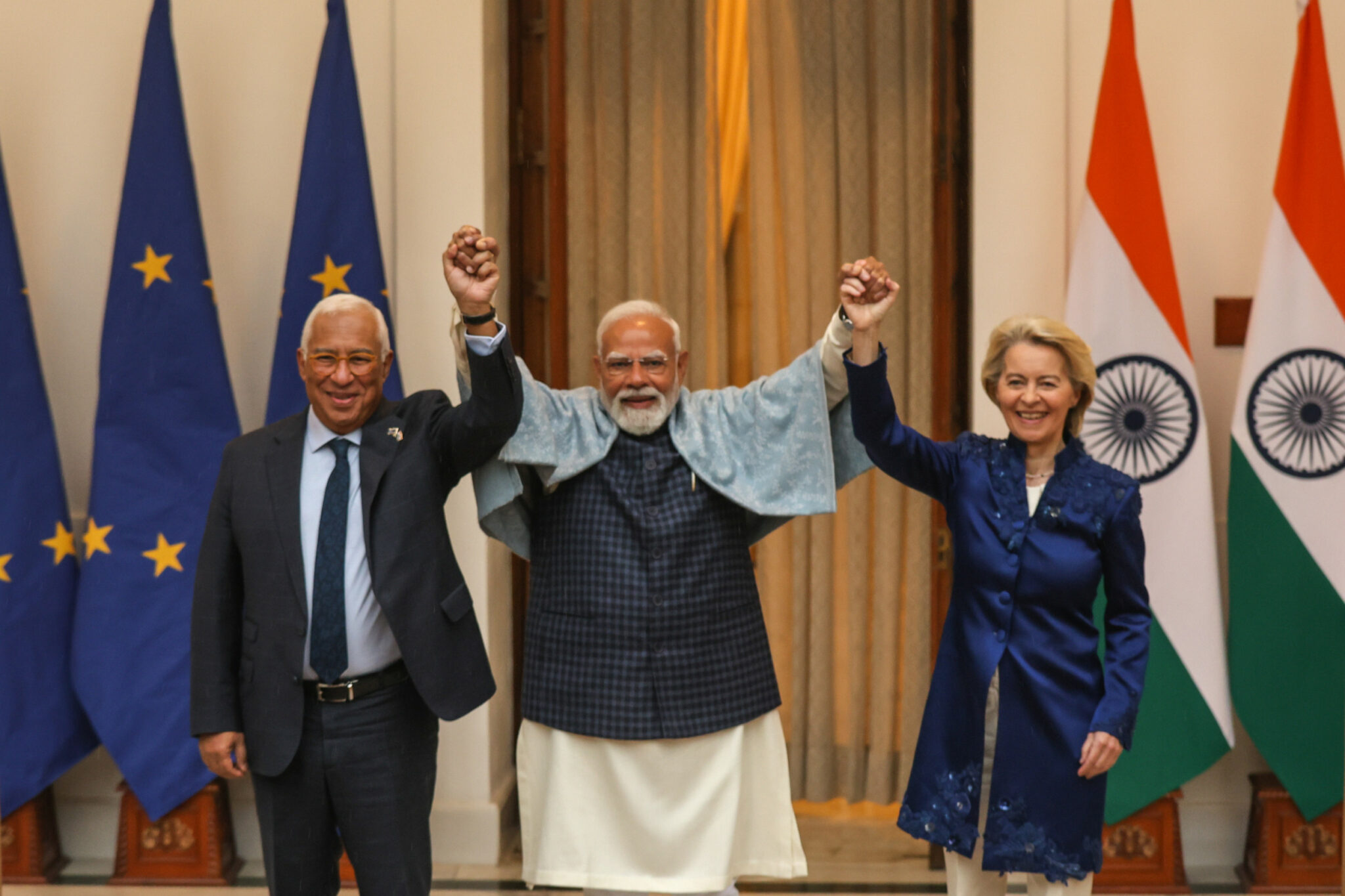
The European Commission reached the agreement with India at a time when the EU–Mercosur deal is still undergoing ratification. European Commission President Ursula von der Leyen described the deal as historic, as it establishes a free trade zone with a population of around 2 billion people. At the same time, the parties deliberately excluded a number of “sensitive” agricultural sectors.
Agriculture was one of the key and most delicate components of the negotiations. The EU and India agreed not to open their markets to certain products that are strategically important for domestic producers. For the European Union, this means no new tariff concessions or quotas for beef, sugar, and poultry, as well as no new market access for milk powder and soft wheat.
India, for its part, has designated dairy products, grains, poultry, and certain types of fruit and vegetables as sensitive categories. A detailed list of products is expected once the full text of the agreement is published.
Despite these limitations, several agricultural and food sectors are set to benefit. India has agreed to reduce or eliminate import tariffs on selected products, including wine, olive oil, margarine and other vegetable oils, kiwis, pears, fruit juices, as well as processed foods such as bread, biscuits, pasta, and chocolate. Import duties on olive oil will be eliminated entirely, while tariffs on wine will be gradually reduced from 150% to a maximum of 20%.
In return, the EU will open quotas for imports of sheep meat and goat meat, sweetcorn, grapes, cucumbers, dried onions, and rum.
Economic impact and next steps
According to the European Commission, tariff reductions could save European suppliers up to €4 billion per year. However, the agreement has not yet entered into force: it still requires approval by EU member states and the European Parliament, as well as ratification in India.
European farmers have generally reacted more positively to the EU–India agreement than to the Mercosur deal. The farmers’ organisation Copa-Cogeca described the outcome of the negotiations as “balanced,” stressing that the agreement combines access to a major growth market with effective protection of sensitive sectors. In the view of farmers, the India agreement shows that it is possible to pursue an ambitious trade policy without undermining domestic agriculture, even amid global trade uncertainty.
PigUA.info, based on pigprogress.net