
German pig farmers generally have a positive view of two-level pig pens equipped with raised platforms. This is according to a study conducted by Germany’s Federal Research Institute for Animal Health (Friedrich-Loeffler-Institut, FLI), which surveyed producers about their practical experience with such housing systems.
The study covered six piglet rearing farms and three finishing farms. At each farm, researchers examined up to five pens housing between 16 and 35 rearing pigs or between 49 and 160 finishing pigs.
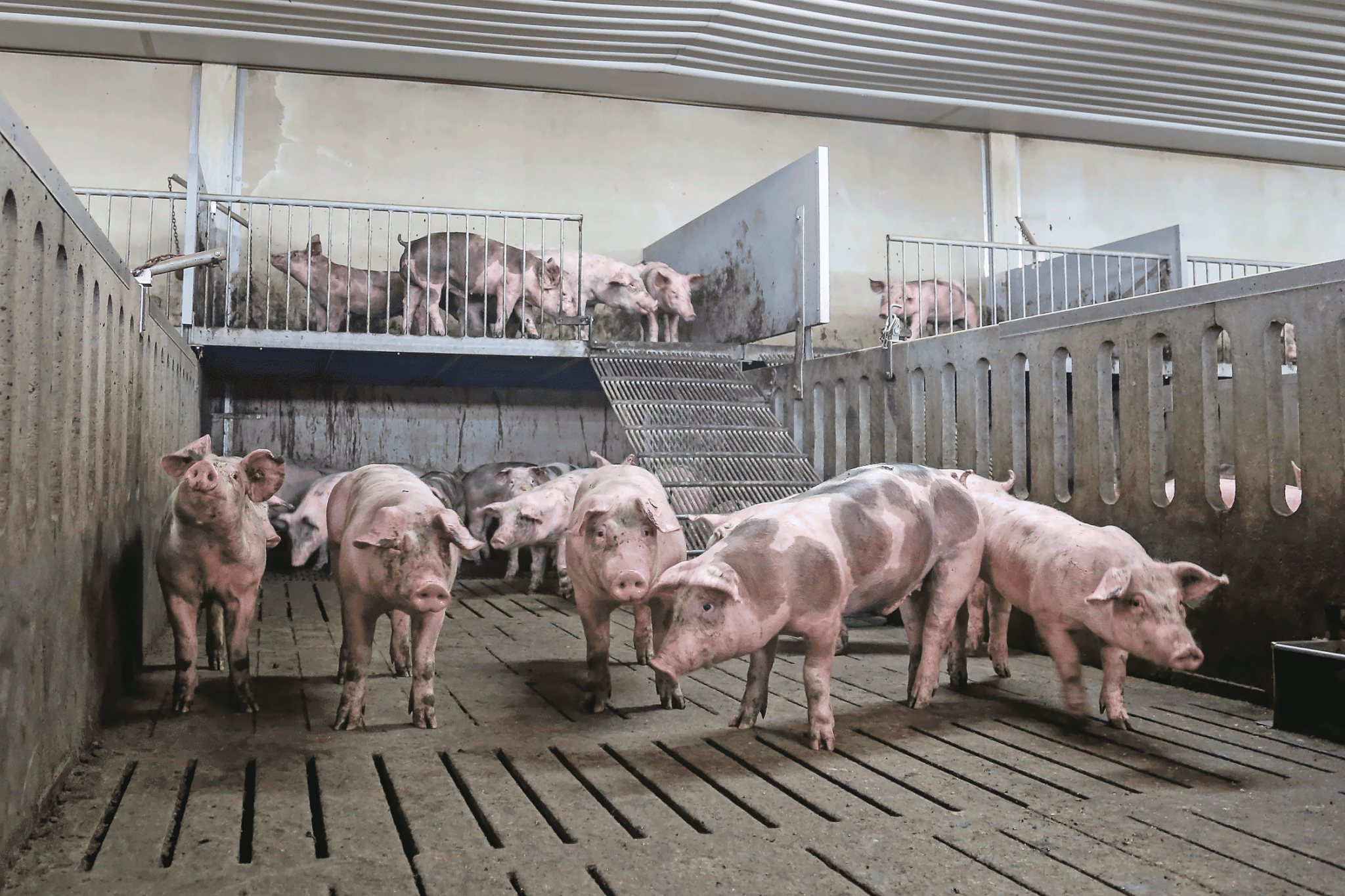
Two-level pens include an additional raised platform that creates extra functional space for the animals. Researchers noted that such structures may help pigs better organize the pen area, particularly by creating separate resting and dunging zones.
According to the study, the raised platforms covered between 25% and 45% of the floor area in rearing pens and between 15% and 40% in finishing pens. More than half of the farmers also placed enrichment materials such as straw or toys on the platforms.
During observations, an average of 15.2% of rearing pigs and 2.2% of finishing pigs were found using the raised platforms.
At the same time, researchers identified certain practical drawbacks. In rearing pens, the level of soiling on the platforms averaged 13%, while the area underneath the platforms showed 20% soiling. Open areas of the pens remained considerably cleaner. In finishing pens, all areas showed a similar level of soiling.
Producers themselves positively assessed the impact of the platforms on air quality, animal behaviour, feeding, and pig health. However, they noted that animal inspections and pen cleaning became more difficult.
Despite these challenges, the majority of surveyed farmers stated that they would install such systems again.
Researchers also pointed out that the question of whether the area of raised platforms can be counted as unrestricted usable floor space under animal welfare legislation remains unresolved.
The study was funded by Germany’s Federal Office for Agriculture and Food (BLE).
PigUA.info based on materials from pigprogress.net