

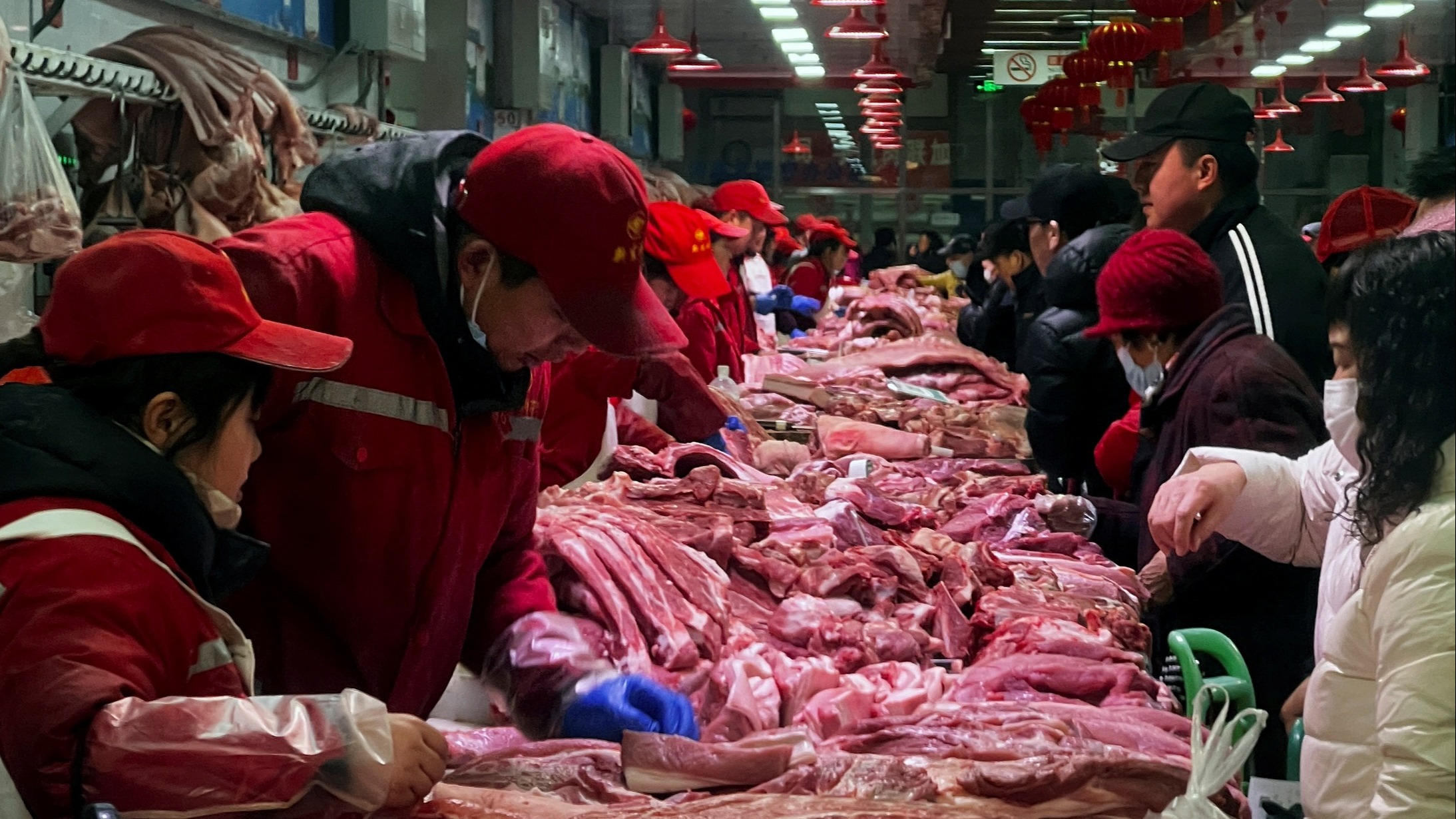
China, the world's largest pork producer, accounting for nearly half of global pork production, continued to expand output in 2026.
According to China's National Bureau of Statistics, pork production reached 16.7 million tonnes in the first quarter of 2026, up 4.2% compared with the same period last year. Pig slaughter also increased by 2.8%, reaching 200.3 million head. Improved productivity and production efficiency remained the main drivers behind the increase.
At the same time, the Chinese government continues to implement policies aimed at rebalancing supply and demand. In March, authorities set a target to reduce the national sow herd to 36.5 million head, down from 39.6 million at the end of 2025. The government has also tightened access to credit and subsidies while encouraging slaughter weights to remain around 120 kg in order to prevent further production growth.
According to the US Department of Agriculture (USDA), China's pork production is expected to total approximately 59.5 million tonnes in 2026, remaining broadly unchanged from the previous year.
Oversupply has continued to put downward pressure on prices. Between January and mid-June, the average live pig price stood at 11.3 yuan/kg, 27% lower than during the same period in 2025. After a slight increase early in the year, prices stabilized from April onwards, as central and local governments began purchasing pork for state reserves to support the market.
Wholesale pork prices also declined significantly. According to China's Ministry of Agriculture and Rural Affairs (MARA), the national average wholesale pork price reached 14.5 yuan/kg in late June, approximately 28% below the level recorded a year earlier.
Analysts note that demand traditionally weakens after the Lunar New Year holiday. In addition, consumers are increasingly shifting toward lower-cost protein sources such as eggs, tofu, and soy-based products, further limiting any market recovery.
The abundant domestic supply has also affected foreign trade. Between January and May 2026, China reduced its pork imports by 30% to 314,000 tonnes. This marks a departure from recent years, when imports of pork variety meats continued to grow despite declining imports of pork muscle cuts.
The European Union remains China's largest pork supplier despite the anti-dumping duties imposed by Beijing. Spain continues to be the leading individual exporter, followed by Brazil and the United Kingdom. The United States has continued to lose market share due to retaliatory tariffs, while Brazil's competitiveness has been affected by higher export prices.
In the pork variety meat segment, the European Union also maintains a dominant position, accounting for 52% of China's imports.
According to Rabobank, China's pork imports may gradually recover during the second half of 2026 as domestic production tightens following government-led sow herd reductions. However, analysts expect weak consumer spending and the broader macroeconomic environment to continue limiting demand. They also emphasize that exporters should increasingly diversify their sales by developing markets across Southeast and East Asia.
Source: PigUA.info, based on AHDB (ahdb.org.uk)