


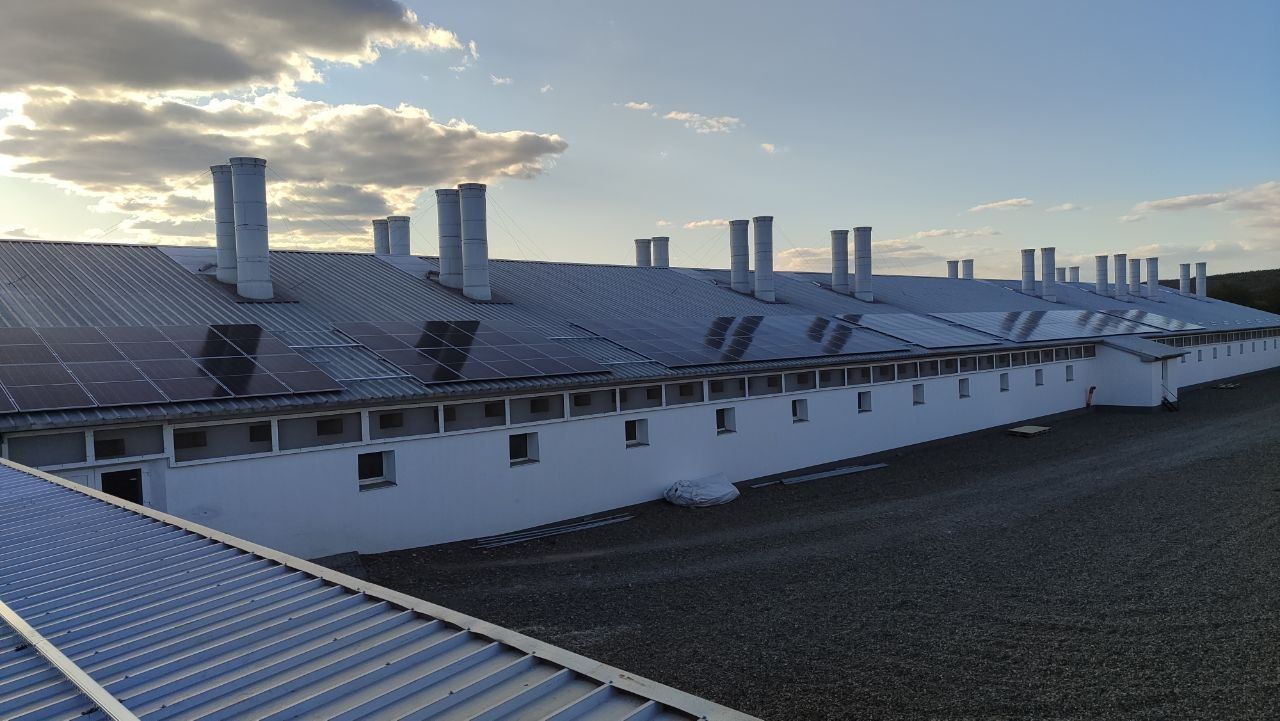
Goodvalley Ukraine has completed a major renewable energy project by launching a network of solar power plants across eight production sites in the Ivano-Frankivsk region.
The project was installed by Rayton, the company responsible for the engineering and implementation works.
The total capacity of the solar energy complex reaches 2.659 MW. The largest facility within the network is a rooftop solar power plant with a capacity of 900 kW. The project utilizes high-efficiency next-generation N-type Trina Solar panels rated at 610–620 W, as well as modern industrial inverters.
According to Rayton’s estimates, during the peak spring and summer months the solar installations will be capable of generating between 340,000 and 380,000 kWh of electricity per month.
The company emphasizes that investing in its own power generation is an important step toward strengthening energy independence amid the ongoing challenges facing Ukraine’s energy system.
The new solar facilities are expected to reduce the company’s reliance on external electricity supplies, improve the resilience of production processes, and partially offset energy costs.
In addition to the economic benefits, the project also delivers environmental advantages. The use of renewable energy will help reduce the company’s carbon footprint and lower greenhouse gas emissions.
Given its scale, the Goodvalley Ukraine solar energy project has become one of the largest distributed solar generation investments among Ukrainian agricultural enterprises in 2026 and reflects the growing interest of agribusinesses in developing their own energy sources.
PigUA.info, based on materials from Latifundist.com