

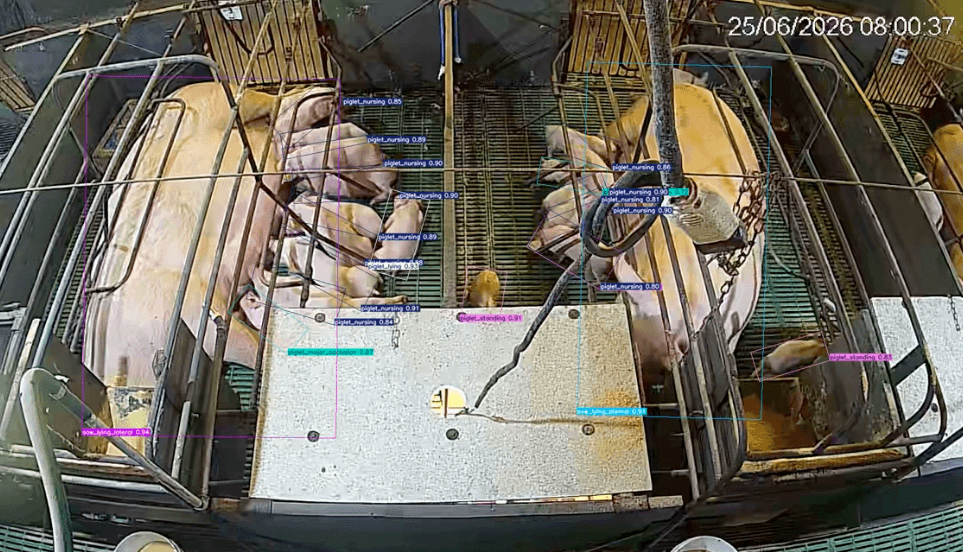
Founded in 2024, Herdian uses cameras and computer vision models trained on thousands of images and more than 30,000 hours of video. The system analyses sow behaviour and identifies situations that may pose a risk to piglets.
In particular, the technology tracks how often a sow stands up, lies down and changes position, while also monitoring changes in feed and water intake. The system can identify cases where a sow lies on her belly and blocks piglets’ access to the teats.
If there is a risk of crushing, the system sends an alert to farm staff or makes a phone call. It can also flag potential health problems in the sow.
According to Herdian, the system generates alerts each week for around 13% of farrowing pens. One-third of these alerts are classified as high priority, while around 70% relate to problems that farm staff had not previously detected.
The technology also monitors the onset and duration of farrowing, intervals between piglet births and possible difficulties with milk intake. The aim is not only to reduce mortality but also to improve piglet weaning weights.
Herdian currently monitors around 3,000 animals and plans to expand the system to cover 10,000 sows by the end of 2027.
On a commercial farm with 1,000 sows and annual production of around 33,000 piglets, the company estimates that use of the technology reduced mortality by 23% and generated a net financial benefit of around €10,800 for the producer in the first year.
For comparison, according to Agriness data, around 9% of piglets born in Brazilian farrowing units in 2025 did not survive to weaning.
PigUA.info, based on materials from foodagribusiness.world