


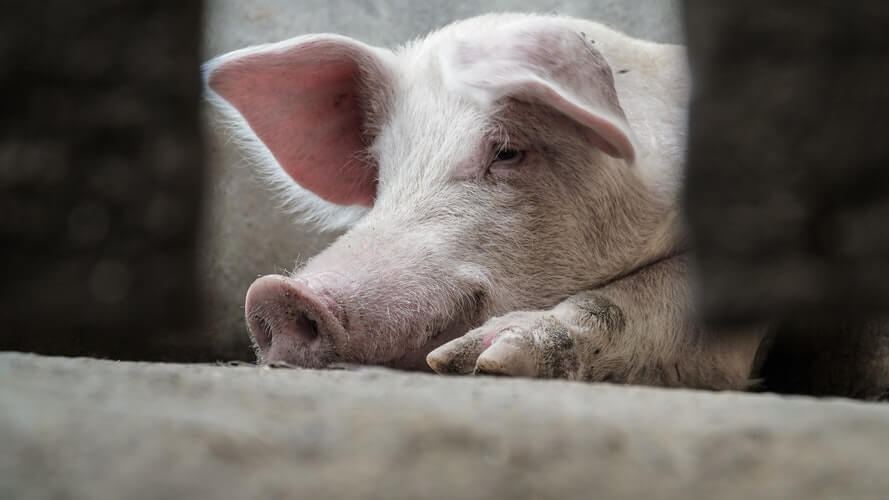
The ASF outbreak was confirmed in June in Szabolcs-Szatmár-Bereg County. It was the first detection of the disease in domestic pigs in Hungary in eight years.
The new animal health threat has emerged at a challenging time for the European market, as pig prices continue to decline. According to K&H Bank, the average EU price stands at around €160 per 100 kg of carcass weight. Meanwhile, prices in the United States have begun to rise, reaching approximately €186 per 100 kg.
Zoltán Demeter, head of K&H Bank’s agribusiness division, said that under a favourable scenario, the market could see a modest recovery in the second half of the year. However, animal health risks remain one of the main sources of uncertainty.
At the same time, the expert urged market participants not to expect the worst-case scenario for Hungarian exports. Last year, the country exported around 156,000 tonnes of pork, of which only 5,600 tonnes were shipped to non-EU countries, including markets in the Far East.
Even if these countries temporarily introduced import restrictions, the affected volume would account for only a small share of Hungary’s total exports. Therefore, experts expect the impact on domestic prices to be limited.
The vast majority of Hungarian pork exports — around 151,000 tonnes — are shipped to other EU countries. The bloc already has well-established mechanisms for responding to ASF outbreaks, as cases in domestic pigs have previously been reported in Romania, Slovakia and Italy, among other countries.
Veterinary restrictions prohibit the movement of pigs and pork products from areas within a 30-kilometre radius of an infected farm until the measures are lifted. Outside the designated restricted zones, Hungary’s trade with its EU partners is expected to continue without significant disruption.
The outbreak may therefore temporarily affect individual farms and certain export destinations. However, Hungary’s trade structure and the EU’s regionalisation approach are expected to limit the overall impact on the country’s pig sector.
PigUA.info, based on materials from hungarytoday.hu